7. Tao (Existence/The Way/Bone/Name/The Breath/Life on It's Way)
8. Revolutionary Suicide
More Info:
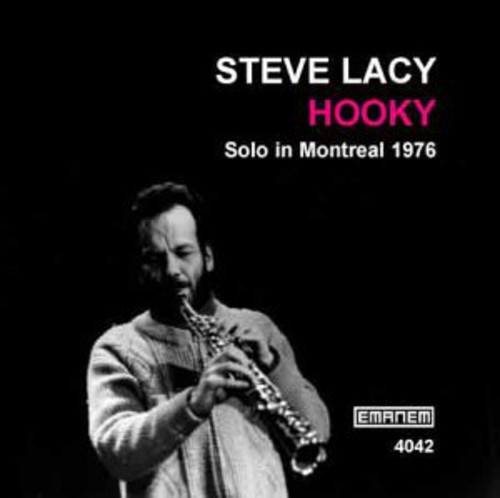
For the record (so to speak), Hooky presents the second digital recording of Lacy's "Tao" suite (after a 1975 Como version), as well as the second recording of "Hooky" (after the version on Snips. ) Regardless of it's historical significance, Hooky provides a fascinating glimpse into an active, focused, creative intellect. With no other players to distract him, Lacy pursues his own muse. Provided you're able to keep up with 78 minutes of intense live performance, you're likely to enjoy this disc. (I'd recommend taking a time out at the natural breakpoint between sets that separates "No Baby" from the "Tao" suite. ) Compared to the very similar recording Snips from the same period, Hooky has significantly higher sound quality. Nevertheless, it's fascinating to hear how Lacy's conception develops in different situations. Four years after his first recorded solo saxophone concerts, Steve Lacy took the show on the road to North America. Two recently released documents allow today's listener a window into Lacy's approach in the spring of 1976: Snips [JazzMagnet], recorded in a New York loft, and Hooky [Emanem], from a Montreal church performance. The Montreal show was Lacy's favorite, and so it has finally been released in it's entirety 24 years later (minus an aborted solo and audience applause). Listeners familiar with Lacy's solo soprano style will recognize certain signature features in this early performance. For the most part, Lacy pursues thematic development without relying on heroic virtuosity or otherworldly extended technique. (One exception: "The New Duck," where Lacy coaxes an amazing array of birdlike noises from his instrument. ) Instead, he states straightforward themes and proceeds to transpose, transmutate, and reharmonize them. The general tone of these pieces can vary from the swinging effluence of "Tao: Bone," to the spiritual depth of "Tao: Existence," to the dancing humor of "Hooky. "